
Python vs JavaScript: Where Each Wins
Python wins data, ML, and automation; JavaScript wins the browser, and Node.js wins I/O-heavy APIs. If you can pick only one, pick the job.
Updated 14 min read
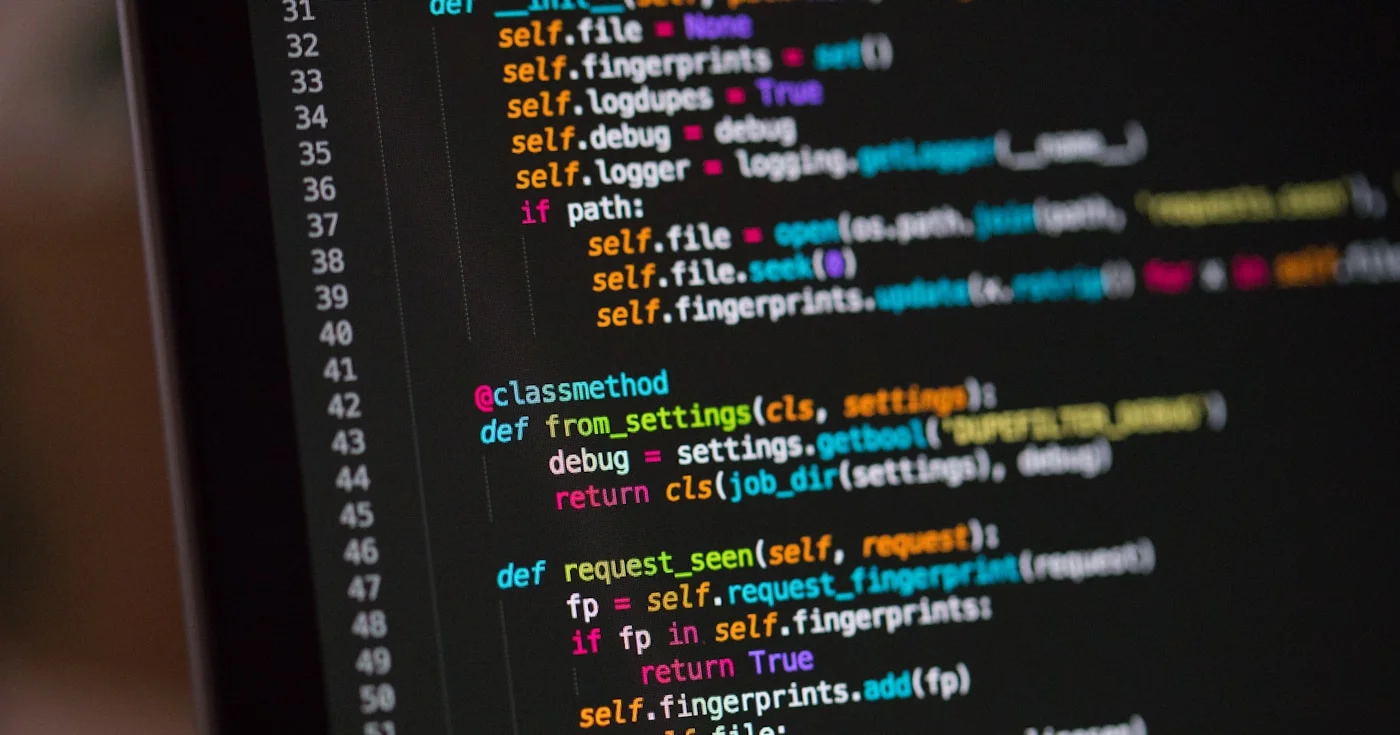

Python wins data, ML, and automation; JavaScript wins the browser, and Node.js wins I/O-heavy APIs. If you can pick only one, pick the job.
Python wins data, ML, and automation; JavaScript wins the browser, and Node.js wins I/O-heavy APIs. JavaScript runs on 98.9% of websites as of September 2026. Python is used by 57.9% of respondents in the 2025 Stack Overflow survey.
If you can pick only one, pick the job. JavaScript is not Java.
Feature | Python | JavaScript |
|---|---|---|
Best For | Data, ML, automation | Browser UI, web APIs |
License | Free (PSF / CPython) | Free (ECMAScript / engines) |
Implementation | CPython 3.14 | V8 in Chrome and Node |
Backend default | FastAPI, Django | |
Data / ML | Native (NumPy, PyTorch) | Thin in-browser ports |
Browser | Pyodide (Wasm) | Native |
Typing | Optional annotations | TypeScript in production |
Key weakness | No native DOM | Thin stdlib vs Python |
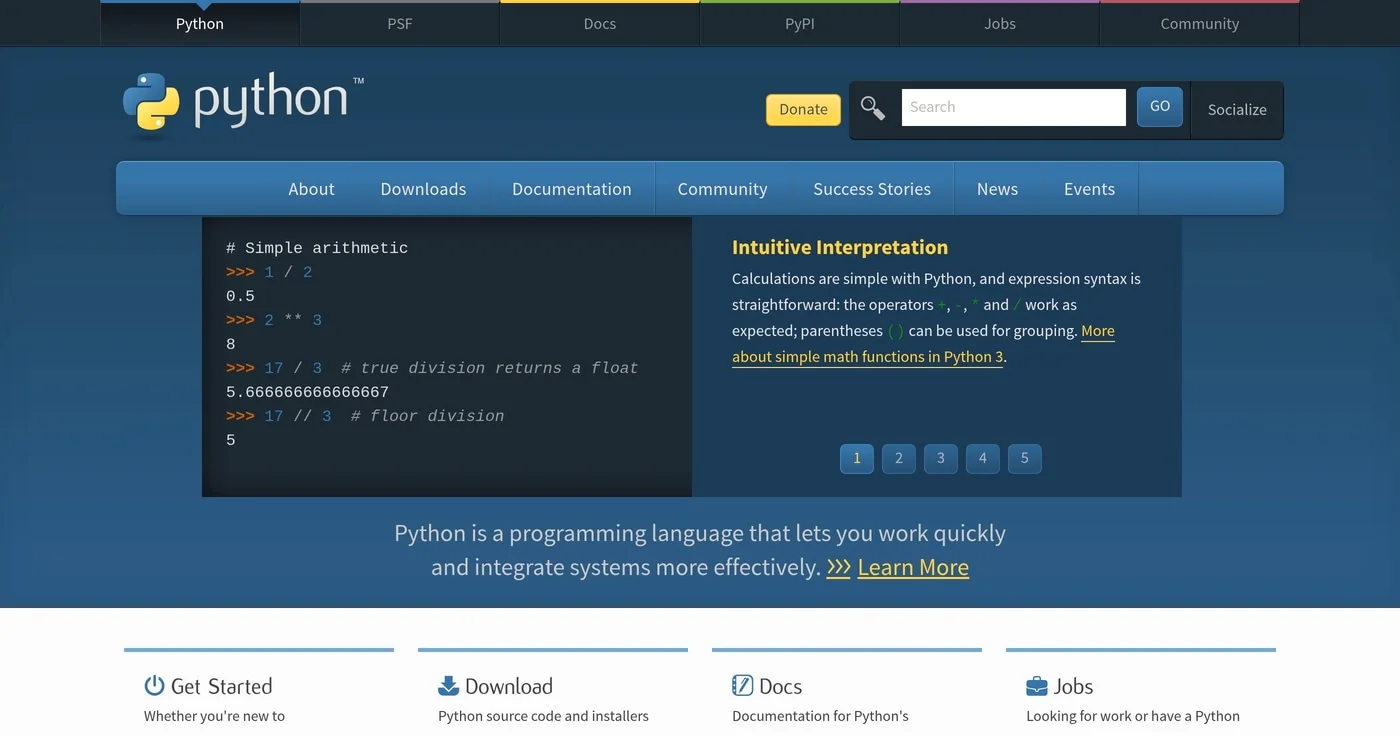
Python is an interpreted, interactive, object-oriented language with modules, exceptions, dynamic typing, and a large standard library. CPython is the original and most-maintained implementation. Live docs as of September 2026 are titled Python 3.14.7.
The Python Software Foundation holds Python 2.1+ intellectual property and distributes CPython free of charge. The 2026 Steering Council (Barry Warsaw, Donghee Na, Pablo Galindo Salgado, Savannah Ostrowski, Thomas Wouters) governs the language under PEP 13. Python is not one person's language in 2026.
You reach for Python when the work is data, training, evals, notebooks, or scripts that glue other systems together. FastAPI is the API-first default on Python teams: the JetBrains / PSF State of Python 2025 puts FastAPI at 38%, ahead of Django at 35% and Flask at 34%. Django still wins when you want admin, auth, and an ORM in one tree.
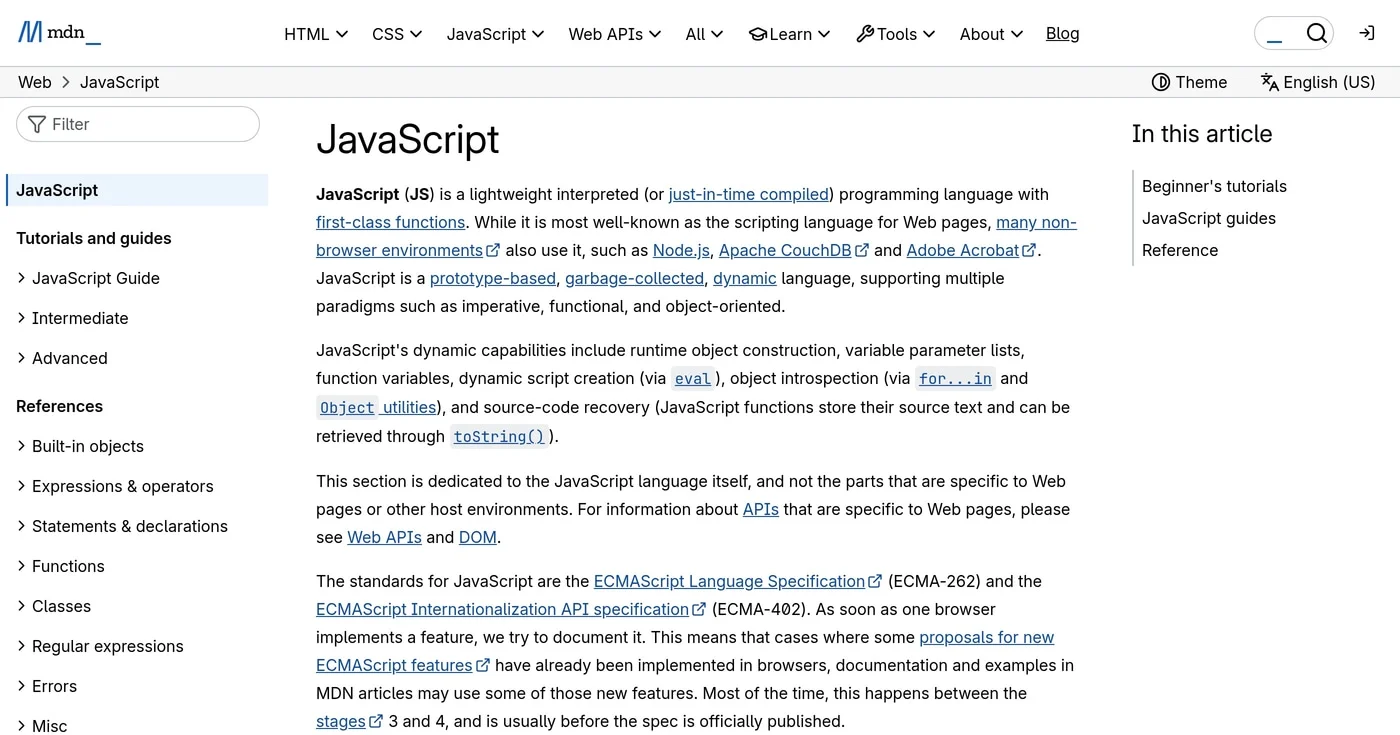
JavaScript is a lightweight interpreted or JIT-compiled language with first-class functions. MDN's first job is to say: do not confuse it with Java.
It is prototype-based, garbage-collected, dynamic, and multi-paradigm. The language standard is ECMA-262 (and ECMA-402 for internationalization), specified by Ecma TC39.
V8 (Google, C++) runs JavaScript in Chrome and in Node. Node.js is an OpenJS Foundation project: an asynchronous, event-driven runtime for network applications.
Almost no Node function does I/O directly. The homepage line is "Run JavaScript Everywhere." That is the same-language full-stack pitch: UI and I/O APIs in one runtime.
What people actually type in 2026 is TypeScript: JavaScript with syntax for types, compiling to JavaScript that runs in the browser, Node, Deno, and Bun.
Indentation vs braces is real and boring. Python uses indentation to define blocks; JavaScript uses braces and optional semicolons.
Both are dynamically typed. Python's optional annotations and JavaScript's TypeScript compiler are how teams add types later.
The concurrency row is the one that matters. CPython historically serialized bytecode with the GIL, while Node's event loop is always on. Neither fact tells you which language to hire for.
If you came here for a 20-row difference table, you already have one. The rest of this page is the job split.
Winner: JavaScript. Browsers execute JavaScript. They do not execute CPython.
That is the entire frontend argument. MDN calls JavaScript the scripting language for Web pages.
If the artifact is a DOM, you do not get a vote.
Python people try anyway. Tkinter, PyQt, Kivy, NiceGUI, and a pile of WebAssembly demos all exist so you can postpone JavaScript. u/PastPicture in r/Python (Sep 2025) spent years on that loop, then switched:
"I've tried every possible way to avoid JavaScript and keep building UIs with Python. I finally caved in and I now build UI with JavaScript, and I'm happier person now."
Data teams have a narrower exception. If the users are analysts and the app is a dashboard, Streamlit vs Gradio keeps the UI in Python so you do not wait on a frontend contract. That is a data-app prototype, not a public marketing site.
Yes, via Pyodide: a port of CPython to WebAssembly/Emscripten, started in 2018 by Michael Droettboom at Mozilla, now independent under MPL-2.0. The FFI is JavaScript ⟷ Python. Cloudflare's Python Workers embed it in workerd; you write from js import Response.
You still need JavaScript for DOM, events, and loading the Wasm payload. Pyodide is a footnote.
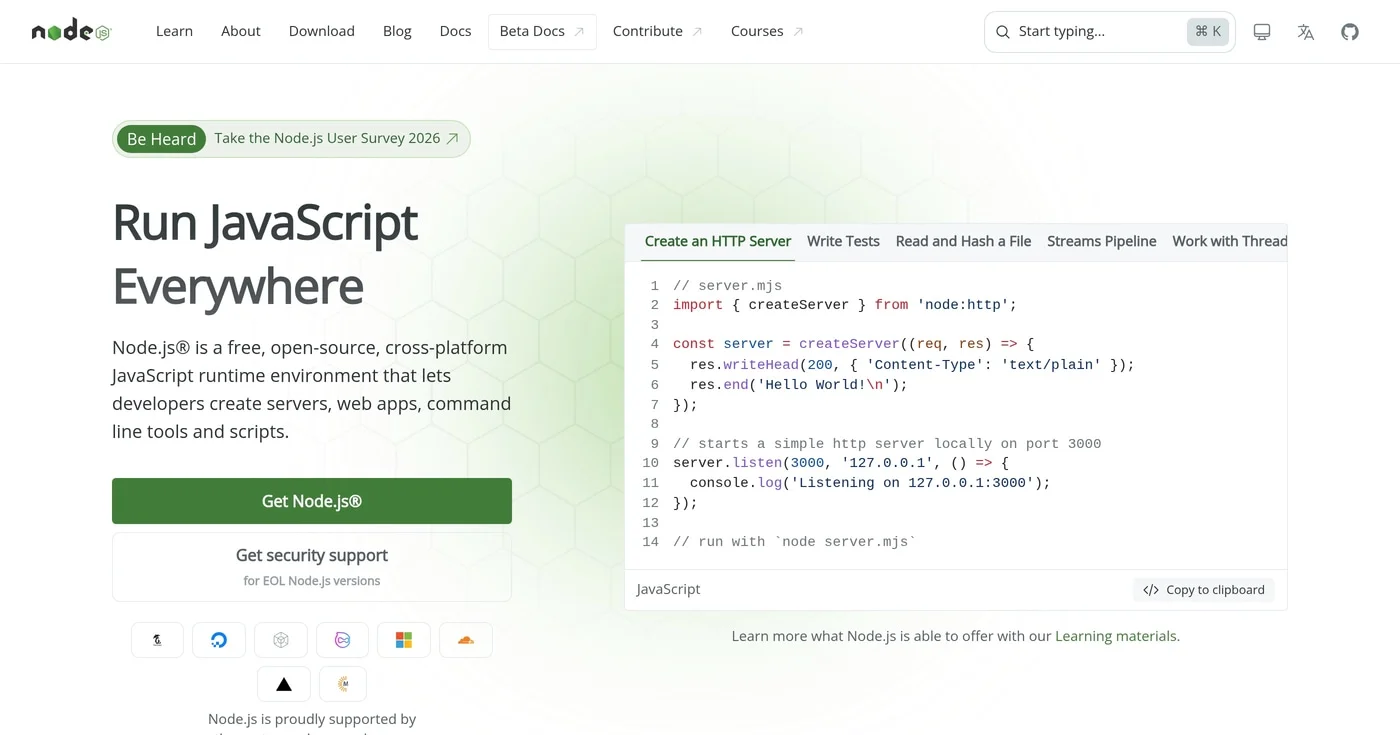
Winner: Node.js for I/O-bound APIs, gateways, and realtime. Python for data-shaped backends and batteries-included web apps.
This is the comparison people mean when they talk about servers. JavaScript-the-language does not have a server. Node.js does.
Node describes itself as an asynchronous event-driven JavaScript runtime designed for scalable network applications. It sits in the same family as Ruby Event Machine and Python's Twisted, then "takes the event model a bit further."
The event loop is not asyncio you remember to run. It is how the process works.
W3Techs (September 2026) puts server-side JavaScript at 7.2% of sites whose server-side language is known, versus Python at 1.2%. PHP still dominates that chart. "Sites using X" is not "jobs hiring X."
On the Python side, pick the framework for the job. FastAPI is the API-first, Python-team default. Django is the batteries-included web app: admin, auth, ORM.
See FastAPI vs Django when that is the actual decision. FastAPI is not a full web framework. Django is not your training loop.
r/node already runs this split in the comments. u/Gokudomatic in r/node (Aug 2026):
"Node.js aims to handle millions of short requests, not to do heavy calculation. Typically, a nodejs backend would communicate asynchronously with another server/microservice implemented in a more appropriate language, like python, java, c# or go, to delegate the hard work."
Node at the edge. Python (or Go, or JVM) on the CPU.
There is no honest single "Python is slower" number. The Benchmarks Game for python3 vs node is task-by-task: how the programs are written matters. A blended "X is faster" does not.
The structural story is enough. V8 JIT-compiles hot JavaScript. CPython interprets bytecode unless the work has already left Python for NumPy or PyTorch C-extensions.
Node wins many I/O-bound API workloads because the event loop is the runtime. Python wins when the work is those C-extensions, not Python bytecode.
Python 3.14's free-threaded build is officially supported. The remaining single-thread tax is about 5-10%, depending on platform and C compiler. Older 3.13-era single-thread penalties are stale.
Ship first, measure the hot path, rewrite that path if it is actually hot. ThePrimeagen (@ThePrimeagen) put the operator version on X in September 2025:
incoming hot opposite take Python is horrendously slow and every job I worked at that used Python on a critical path rewrote it... ...After the company was worth 100m+ It's ok to rewrite later, just get it right first
Python on a critical path gets rewritten after the company can afford it. That is not an argument against starting in Python.
Winner: Python. TensorFlow.js exists. It is the thin exception.
Lex Fridman in the Lex Clips cut of his Primeagen conversation (2:32):
"Anything that relates to data or machine learning, Python is sort of the leader there."
Stack Overflow's 2025 survey matches that split. Python usage among all respondents sits at 57.9%, up 7 points year over year.
Learners already skew Python at 71.8%. Python did not overtake JavaScript.
JavaScript is still at 66% overall and 68.8% among professionals.
The lock-in is libraries and people, not syntax. Training, evals, notebooks, pandas, PyTorch, and the glue around hosted models all assume Python. If you are building LLM apps in that world, start from the LangChain guide, not from a Node tutorial that wraps the same HTTP API.
JavaScript shows up at the product edge: streaming tokens into a React tree, tool-calling from the browser, a thin SDK around a hosted model. That is UI and transport. The intelligence layer in 2026 AI products is still Python.
On r/learnprogramming, u/djhaskin987 (May 2026) said the same split without a survey:
"Data science - Python is king. Pretty much the only place where there is no other answer but JavaScript is web frontend, or making browser user interfaces. That's what React is for. Coincidentally, lots of devs and jobs focus here, but if you look close there's way more to the job market than just React."
For demand texture beyond this page, the Python statistics roundup is the hub. Python is in demand in 2026. The browser still is not its job.
Winner: Python, unless the product is already Node.
The Python FAQ sells "remarkable power with very clear syntax" and a standard library that covers files, HTTP, subprocesses, zipfiles, and csv without a shopping trip. That is why Python is the glue language on data teams, SREs, and researchers who are not trying to become frontend engineers.
Node can script. node -e and a few npm packages will rename files. If the production app is already TypeScript, staying in TypeScript for the glue is cheaper than standing up a second runtime. If there is no Node app, do not introduce one for a cron job.
See the Python automation guide for the library map (files, browsers, scheduling, pipelines). Default Python. Stay in Node when Node is already the house language.
Winner: Tie. Same-language JavaScript/TypeScript plus Node if the product is the web.
Split-stack TypeScript UI plus Python API if the product has intelligence, training, or evals.
Node makes the same-language path real: UI and I/O APIs in one runtime. It still loses training, evals, and data work.
The 2026 product that users touch in a browser and that also trains or evaluates a model is usually both. A TypeScript UI (Next.js or similar) talks to a FastAPI service.
Thin hosted-LLM wrappers skip FastAPI and stay in TypeScript SDKs. Standing up FastAPI "because AI" when you only forward prompts is fashion.
r/learnprogramming already collapsed the career version of this. u/Jahonay (May 2026):
"If you're in web development, just assume that you'll need to know JavaScript no matter what, or at least that you should. Python is still a great language to learn, and I've seen plenty of jobs that require it. Learn both."
If you already have a Python team and you force a JavaScript frontend split for a data app, you pay in API contracts and lost prototype speed. Streamlit and Panel exist so you do not do that until the app has to live on the public web.
Production JavaScript in 2026 is TypeScript more often than the word "JavaScript" admits. Stack Overflow 2025 professionals: TypeScript at 48.8%. GitHub's Octoverse 2025 put TypeScript first by monthly contributors in August 2025, about 42,000 ahead of Python, at +66% year over year.
Python grew +48% to 2.6 million contributors. JavaScript still had 2.15 million contributors, at +24.79%. JavaScript and TypeScript together still move more GitHub activity than Python alone.
TypeScript 7.0 is the native Go port of the compiler (announced 8 July 2026). The VS Code full-build number on that post is 125.7s down to 10.6s (11.9×) versus TypeScript 6.
Toolchain speed is now part of the JavaScript performance story. It does not make TypeScript a data science language.
TypeScript vs Python is still the same job split as JavaScript vs Python, with types on the JS side. Browser and Node stay TypeScript. Data, ML, and automation stay Python.
The type-checker comparison on this tenant is mypy vs pyright, which is a Python-only decision.
Both languages are free.
CPython is distributed by the PSF at no charge. JavaScript engines are free.
Node.js is an OpenJS project. TypeScript is Microsoft, Apache-2.0.
The bill is people and operations. Python's tax is interpreter and venv drift. JavaScript's tax is Node major upgrades and the long tail of end-of-life runtimes still sitting in CI.
As of September 2026, current Node lines were Latest LTS v24.20.0 and Latest Release v26.8.1. Production means Active or Maintenance LTS, not Current.
Python 3.14's first final was 7 October 2025 (EOL October 2030). JetBrains still had most surveyed developers on 3.12, 3.11, and 3.13. Most people are not on 3.14 yet.
PyPI's 2025 year in review recorded 130,000+ new projects, 3.9 million new files, and 1.92 EB transferred. Treat package-count headlines as stale until you re-read the index.
Pick the job. First language: JavaScript (and TypeScript) if the work is the web. Python if the work is data, ML, or automation.
Past a first language, you will likely touch both.
ThePrimeagen, on the same Lex Clips tape (1:07):
"I think the first language people should learn if they have no idea about anything is JavaScript. You can express anything with very little effort. It's really great to be able to draw a box and move a box."
He also grants the ML exception in the same conversation. You cannot write the front end in Python, and you cannot do the ML stuff in JavaScript nearly as easily.
Tim Ruscica (Tech With Tim, 2:05) is blunter on listings: if you are looking at frontend or full-stack roles, JavaScript is 100% the language you should be learning. Picking the other one first, he says at 1:30, is not a massive mistake.
If you want the gentler syntax and you do not know the job yet, Python is a defensible start. Learners in the 2025 survey already go there (71.8%).
Pair it with the Python for beginners path, then add JavaScript the week a browser UI shows up. Do not spend a year avoiding the DOM.
Unpaired search interest is not an openings census. Aggregator salary posts are not primary sources.
Read Python statistics for the demand picture. "Python has fewer jobs because it is not web" is folklore.
Choose JavaScript (and TypeScript, and Node) if you need a UI in a browser this month, a same-language full stack, or an I/O-bound API and gateway layer.
Choose Python if you need data work, training, evals, notebooks, FastAPI on a Python team, Django's batteries, or scripts that glue other systems.
Choose both if users hit a web UI and the product also has an intelligence layer. That is a TypeScript frontend and a Python API.
Python vs JavaScript is a job map.
The Python GIL is a CPython mutex: one OS thread runs bytecode at a time. Default 3.14 still has it; 3.14t is supported opt-in.
Streamlit turns a Python script into a data app by rerunning the whole file. Covers session state, cache, Community Cloud caps, and when FastAPI wins.
A Python context manager is the with protocol: __enter__/__exit__, contextlib helpers, custom classes, and async with. Files are an example, not the definition.
